Social media planning tool
Social Media Planning Tool and Workflow Guide
A social post workflow tool should reduce chaos in the week. If it only stores content ideas, it is not doing enough.
Social media planning tool
A social post workflow tool should reduce chaos in the week. If it only stores content ideas, it is not doing enough.


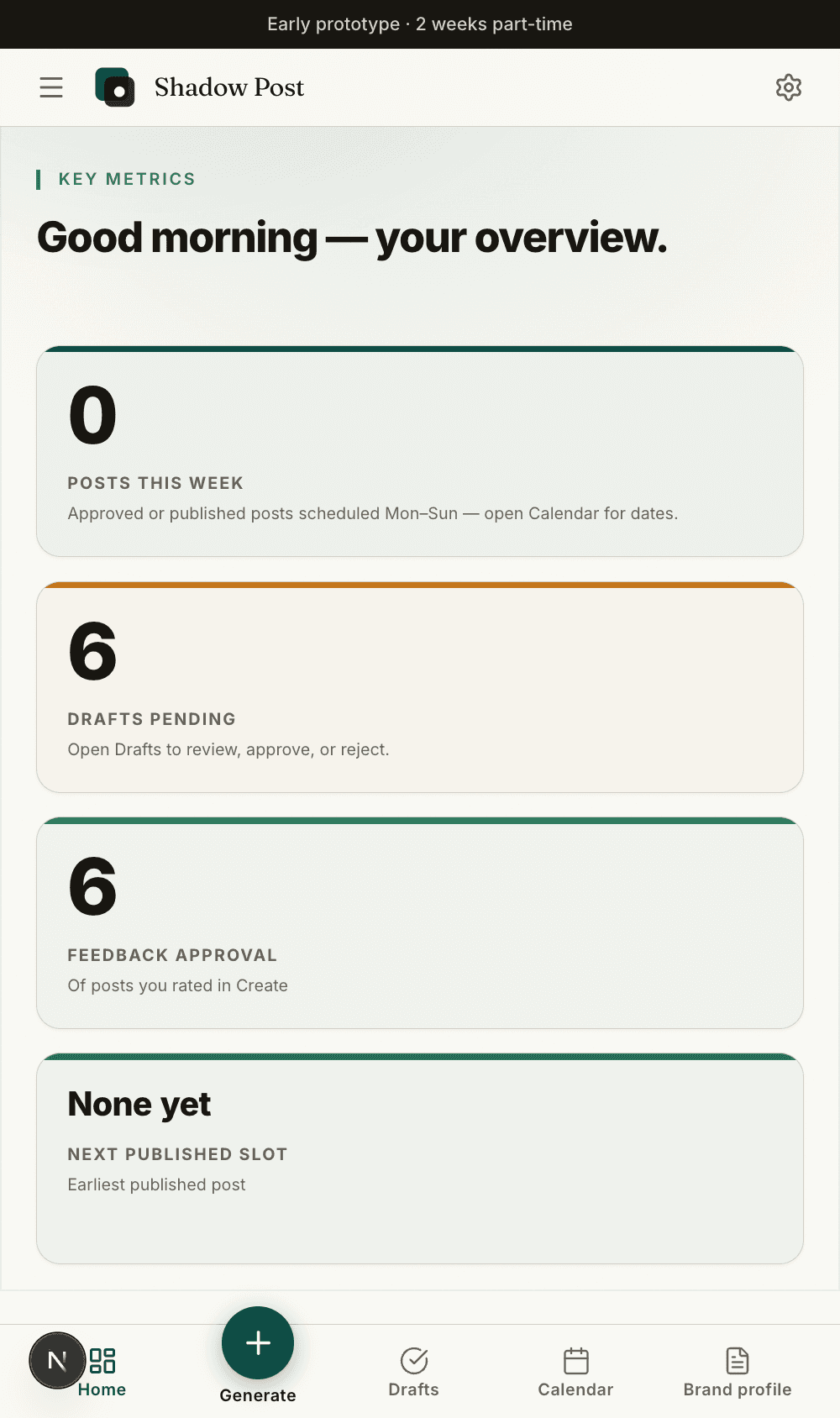
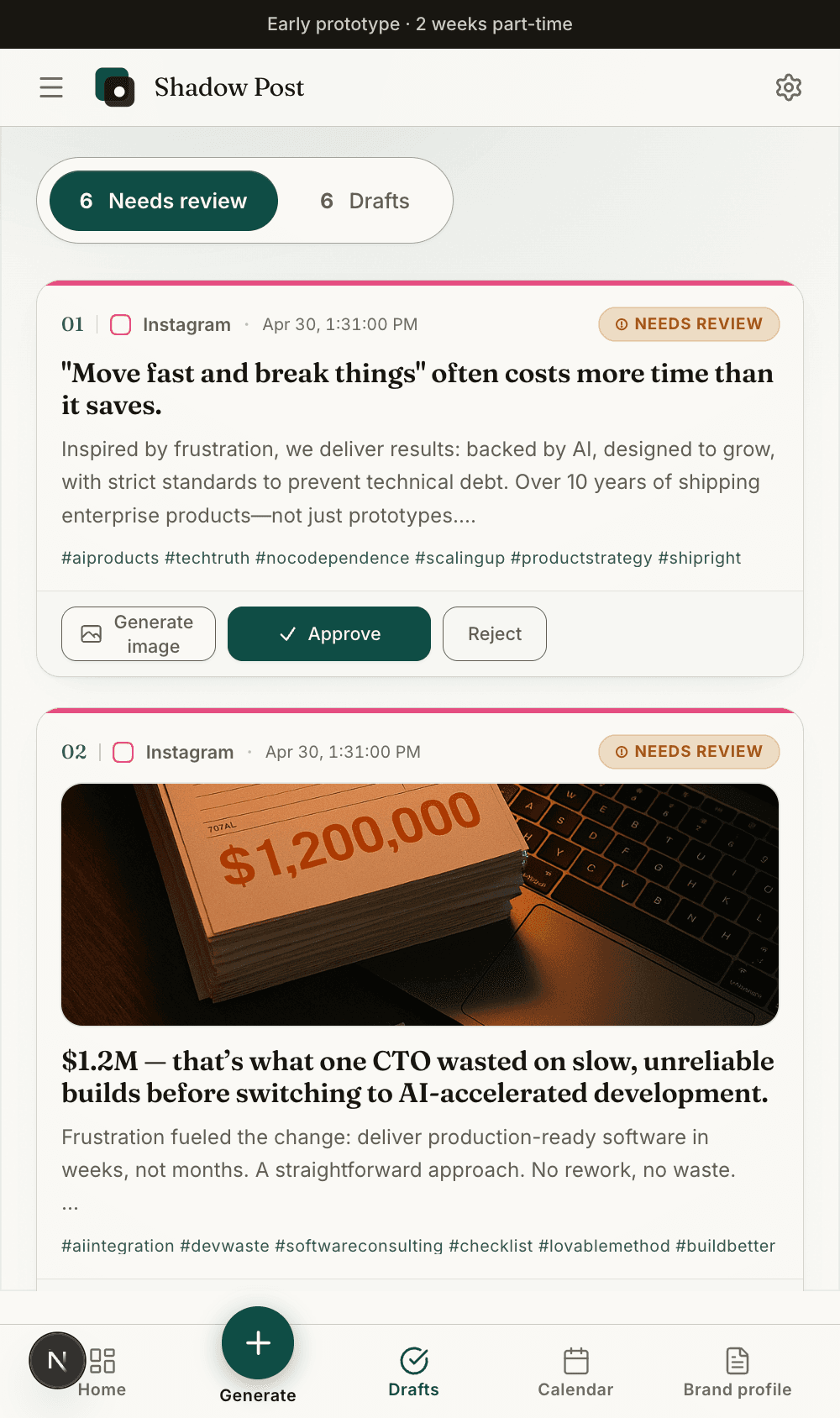
Keep the content page grounded in the real product: brand setup, draft review, and calendar planning live in one calm workspace instead of separate tabs.
A planning tool needs to connect brand rules, content slots, review status, and the calendar itself. Otherwise the work still happens in side docs, chat, and memory.
The right question is not whether the tool can store posts. It is whether the tool helps a team move from strategy to approval without rebuilding context every week.
A social post workflow tool is useful when it shows more than the caption. The team should be able to see why a post exists, who owns the next step, which proof point supports it, and whether it is ready for approval.
That is the difference between a content list and a working system. The list stores ideas. The workflow moves posts from plan to draft to review without rebuilding context.
Small teams do not need a giant publishing suite. They need a clear place to define voice, generate first drafts, and see the week ahead.
That is why planning and generation belong close together. When they are separate systems, the handoff becomes the bottleneck.
Most teams repeat the same decisions every week: what are we promoting, what proof do we have, what do we need to say on each channel, and what needs review.
A useful planning tool makes those decisions explicit and reusable. That is what turns a calendar from a content graveyard into an operating surface.
Before a team needs a full planning tool, it usually needs a clean social media content calendar template. That template should hold the weekly theme, channel, draft owner, proof point, CTA, and approval status for every post slot.
The planning tool becomes more useful when the template logic is already clear. Otherwise the team buys software before it knows what structure it is trying to repeat.