AI brand voice generator
Use the generator when you know your audience and value proposition but have not documented how the brand should sound yet. It turns business context into practical voice rules for posts, prompts, and review.
This is a planning tool, not a final style guide. It gives you a usable starting point you can refine with examples, reviewers, and live content before it becomes the voice your team relies on.

Brand context stays attached
Generated output
Shadow Posts should sound clear, practical, encouraging. Write for SMB owners who need social content without hiring a full team. Lead with concrete meaning, keep sentences tight, and repeat the idea of on-brand social when you need a recognizable hook.
Do: anchor every post in AI-assisted drafts that stay aligned with a clear brand profile; use proof like structured tone rules, review notes, and a weekly calendar; end with a direct next step such as "Book a demo." Do not: lean on generic hype, vague promises, startup jargon.
Write as Shadow Posts. Audience: SMB owners who need social content without hiring a full team. Tone: clear, practical, encouraging. Core offer: AI-assisted drafts that stay aligned with a clear brand profile. Proof points: structured tone rules, review notes, and a weekly calendar. Repeat the phrase "on-brand social" when natural. Avoid generic hype, vague promises, startup jargon. End with: Book a demo.
Start with concrete inputs: audience, offer, proof, disliked language, and the level of directness you want. Vague prompts create vague voice rules.
Treat the output as a working draft. A useful AI brand voice generator should give you rules to test against real social posts, sales copy, and support replies.
The strongest result comes when the prompt includes what the brand refuses to sound like. That negative boundary keeps the generated voice from drifting into generic startup copy.
Audience: who the content is for and what pressure they are under. Offer: what you help them do. Proof: why someone should believe the claim.
Tone direction: how direct, warm, technical, playful, or restrained the brand should feel. Avoid list: phrases, claims, or styles that would make the brand sound wrong.
Example language: one short sentence you like is enough to steer the first draft. The generator can work without examples, but examples make the result sharper.
FAQ
A brand voice generator turns your audience, offer, proof points, and tone direction into a first-pass voice summary, do-and-don't list, and prompt starter.
Yes, if the AI brand voice generator starts from audience, positioning, proof, and example language. It should produce draft rules that a human can test against real posts, not a finished brand book.
The analyzer works from existing content. The generator works from your positioning inputs when you need a starting point before you have enough published material.
Enter who you sell to, what you help them do, why they should believe you, words you already use, words you never want to sound like, and one or two example sentences if you have them.
Use it as a first version. Before publishing with it, test the rules against a real social post, a sales email, and a short product explanation so the voice has practical boundaries.
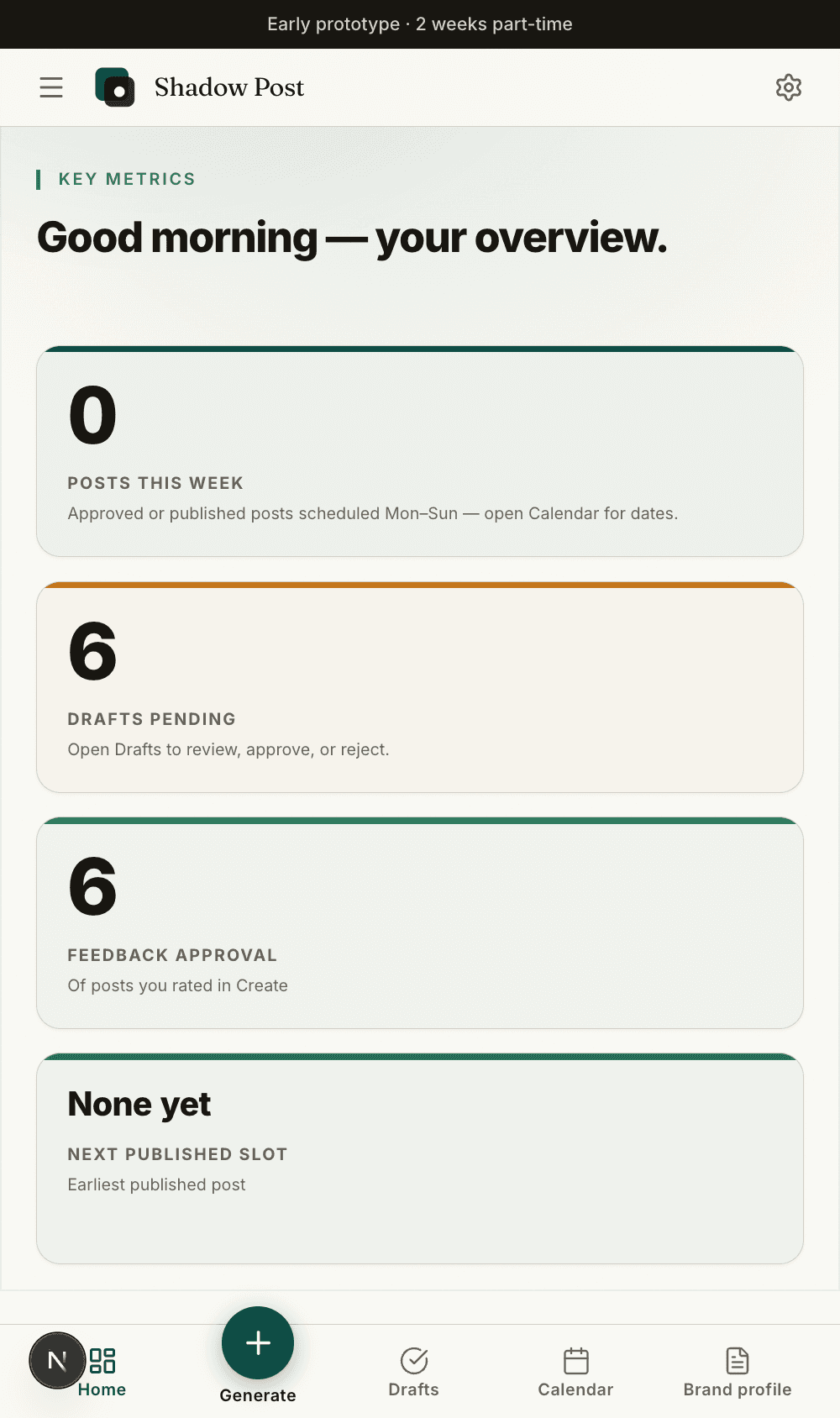
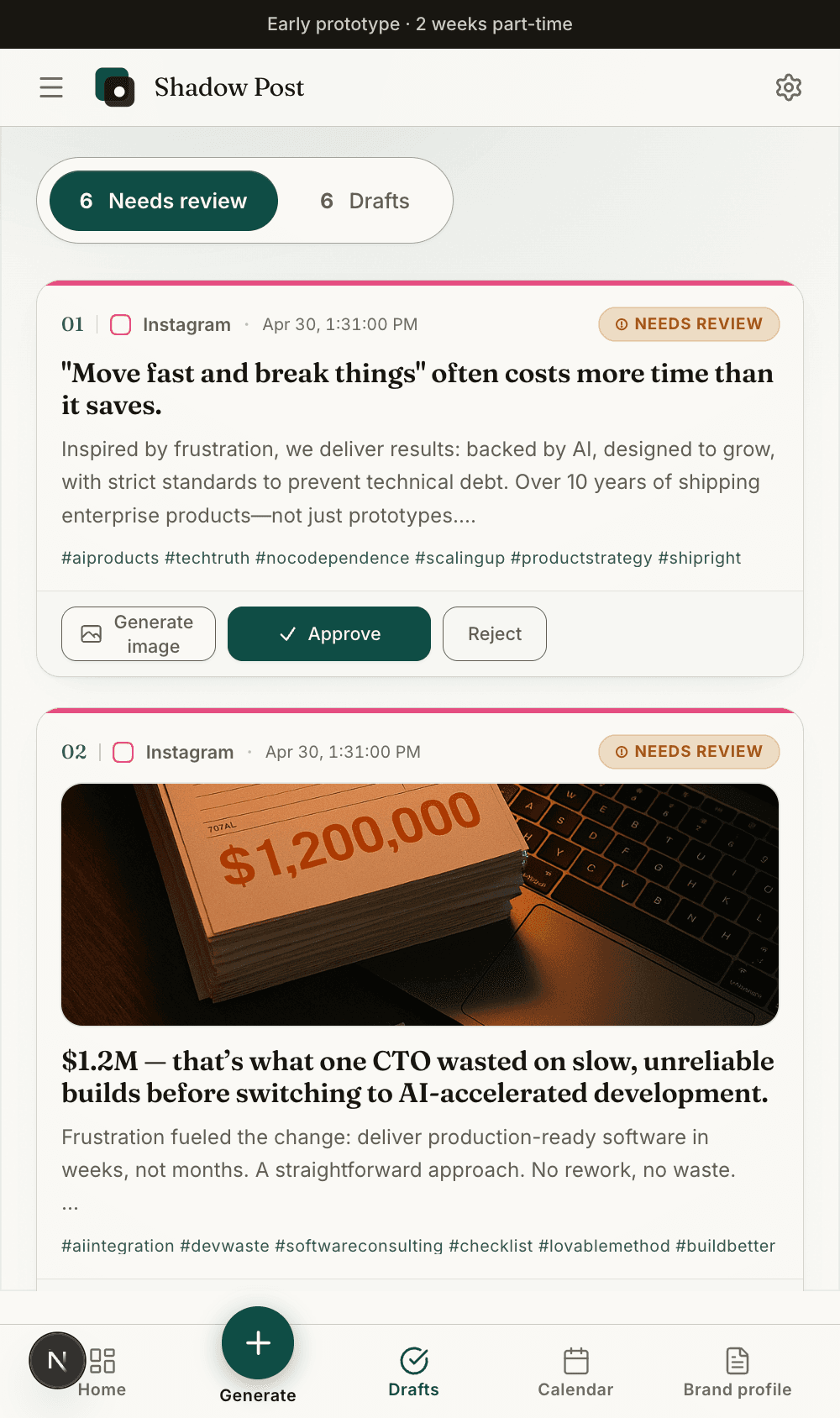
Brand profile, draft intent, and approvals stay with the work.

The free tools stay lightweight, but the full app keeps the resulting draft, review state, and calendar slot connected.
Look for a short voice summary, three to five voice traits, words to use, words to avoid, and prompt instructions your team can reuse.
If the output only lists adjectives like friendly, bold, or professional, it is not enough. Each trait needs a boundary and a writing example.
For social content, the output should also explain how the voice changes between an educational post, a proof post, and an offer post without becoming a different brand.
After generation, pick three review checks: does the post sound specific, does it use approved proof, and does the CTA match the brand's level of directness.
Those checks matter because brand voice only becomes useful when it shapes approval. Otherwise the generator creates a nice document that never changes the posts.
Use this generator when you are starting from positioning inputs. Use the brand voice analyzer when you already have posts, emails, or page copy and want the patterns extracted.
The strongest workflow is generator first, analyzer later: create the draft voice, publish real examples, then analyze what actually sounds like the brand.
Use the AI brand voice generator to create the first voice profile, then use the social media post generator to test that voice in a real draft.
Once the voice holds up, move the rules into the brand voice guide and use the calendar workflow to keep posts consistent across the month.