AI social media content generator
AI Social Media Content Generator Guide
The real problem is rarely access to AI. It is the missing operating context around the AI: audience, offer, proof, voice, and a clear review path.
AI social media content generator
The real problem is rarely access to AI. It is the missing operating context around the AI: audience, offer, proof, voice, and a clear review path.


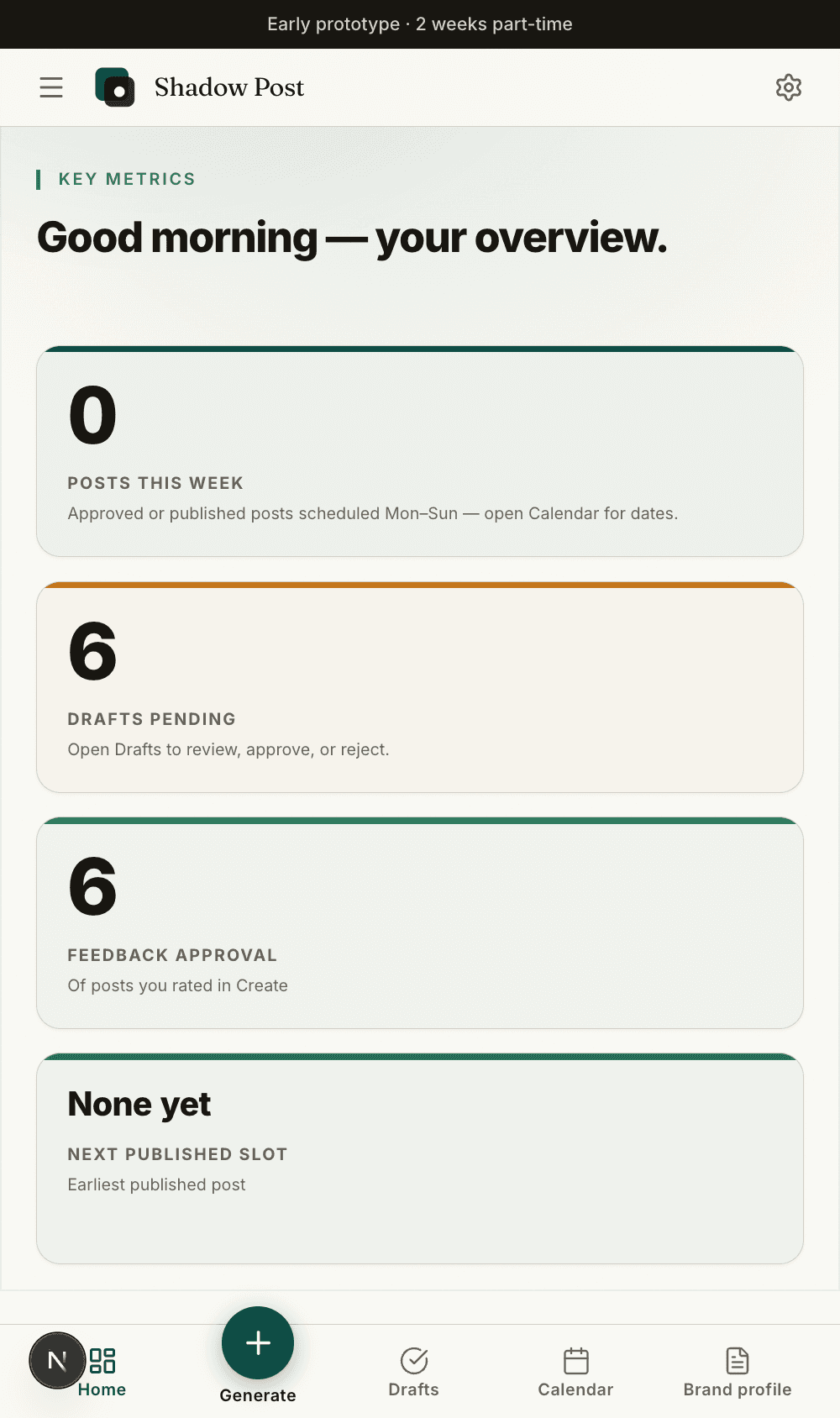
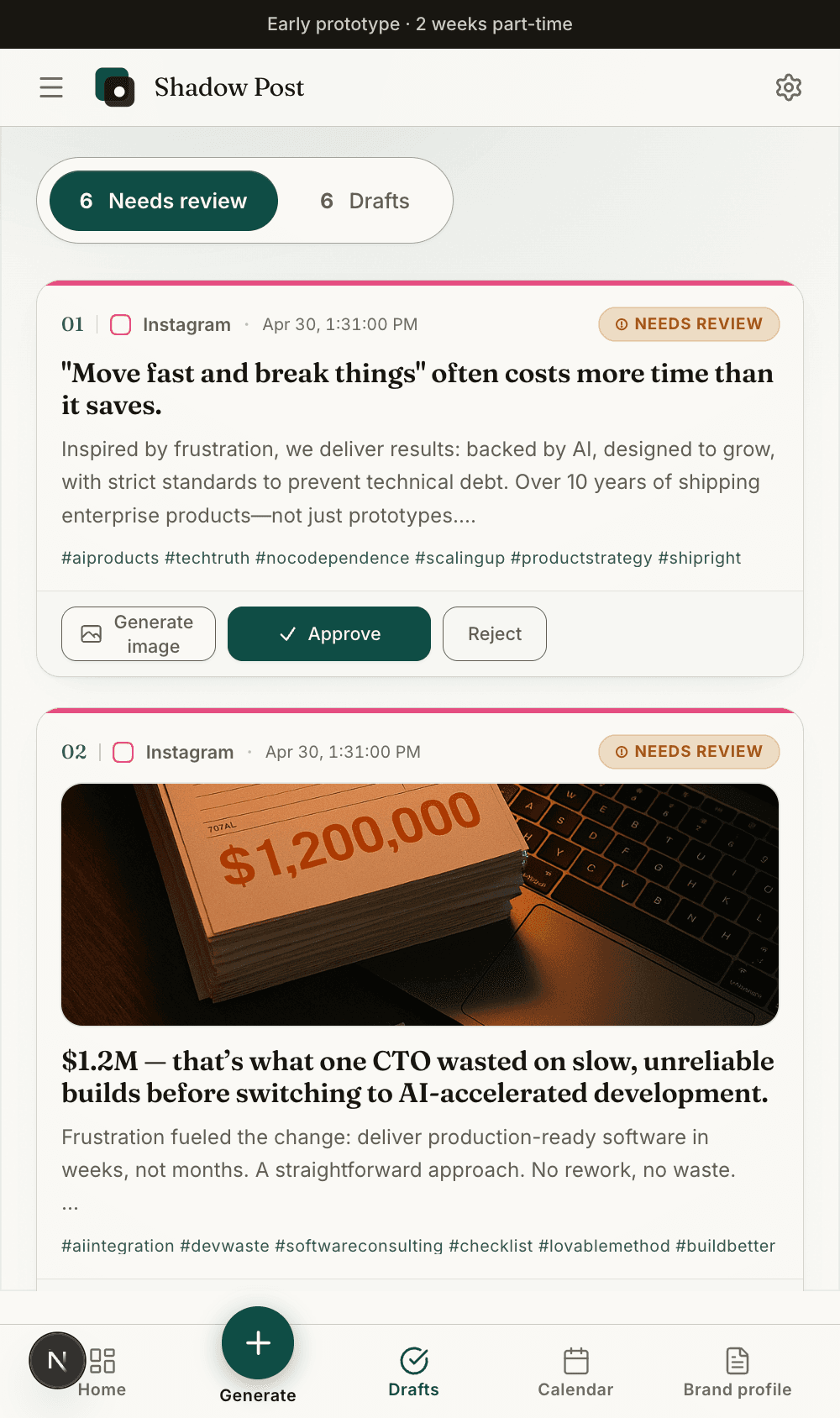
Keep the content page grounded in the real product: brand setup, draft review, and calendar planning live in one calm workspace instead of separate tabs.
If the model does not know the audience, offer, proof points, and no-go language, the output will sound average. That is not a prompt-writing issue. It is a context issue.
A usable AI workflow starts with a short brief or brand profile, then adds channel and CTA intent before any post draft is generated.
The fastest path is not to ask AI for a perfect post. It is to get a strong first structure with the right hook, proof, and CTA, then edit for voice and specificity.
That is why deterministic tools still matter. They reduce blank-page friction without pretending they replace editorial judgment.
The generator should not write strategy, proof, education, and promotion all at once. Pick one job for the draft: teach the problem, show proof, explain the process, answer an objection, or make the offer.
That constraint makes the draft easier to review because the team can judge whether the post did the job instead of arguing about every sentence.
FAQ
It is a workflow or tool that turns business inputs into draft social posts. The useful ones start from positioning, audience, proof, and voice rules, not only open-ended prompts.
Start with one audience, one offer, one proof point, one CTA, and any words your brand should or should not use. Those inputs give the generator a job instead of asking it to invent context.
They usually lack audience specificity, real proof, and any consistent voice system, so the copy becomes generic very quickly.
Keep voice rules separate from campaign goals. Reuse the same tone, vocabulary, and review rules, then change the offer, hook, proof, and CTA for each campaign.
It helps with first drafts, but small teams still need a calendar, review rhythm, and simple ownership rules so generated posts become publishable work.
The best option starts with audience, offer, and proof before writing copy. It should produce editable drafts quickly and connect to a repeatable calendar workflow.
Yes. A free generator is useful for first drafts when you feed it strong inputs. The draft quality depends more on your context and proof than on paid features.
Your brand voice should stay stable. Your campaign angle should change. When teams mix those together, every campaign sounds like a new brand and every post needs a full rewrite.
Use the voice guide to hold the line. Use the generator to change the idea, the hook, or the CTA inside those guardrails.
AI can make weak claims sound smoother, but it cannot turn missing evidence into trust. Give the generator a customer quote, result, process detail, objection, comparison, or concrete example before you ask for a cleaner version.
For small businesses, the best proof is often ordinary: a common customer question, a before-and-after process change, a local example, or the reason a service is done a specific way.
A generator helps with one post. A social media content calendar decides where that post belongs in the month and what role it plays next to the other posts.
After the first draft is strong, assign a channel, publish window, asset need, owner, and approval status so the post does not stay trapped in a prompt result.
The best AI social media post generator is not the one with the loudest output. It is the one that consistently turns your real offer and proof into usable first drafts your team can actually review.
Use three checks: does it ask for audience and proof, can it produce a clear hook-body-CTA structure, and can the draft move into your planning workflow without a rewrite from scratch.
A free AI social media post generator can still save time if you use it for structure, not final copy. Feed one audience, one offer, one proof point, and one CTA into each run.
If the output sounds generic, improve inputs before changing tools. Most weak drafts come from missing context, not from free vs paid plan limits.
A no-sign-up AI social media post generator is useful for quick trials, but speed should not be the only decision factor. The draft still needs to fit your brand voice and business intent.
Compare tools by output quality, editing effort, and how easily each draft can move into your content calendar. A fast draft that cannot be reused is still expensive.
Generic: "We help businesses grow with social media content. Contact us to learn more."
Proof-led: "If your weekly posts keep getting delayed, start with one customer question and one proof point. We turn that into a draft your team can approve in minutes instead of reopening a blank prompt."
Check whether it handles real business inputs and gives structured output, not only catchy hooks. Then validate if the draft can move into your review and publishing process.